The Stories That Start Conversations
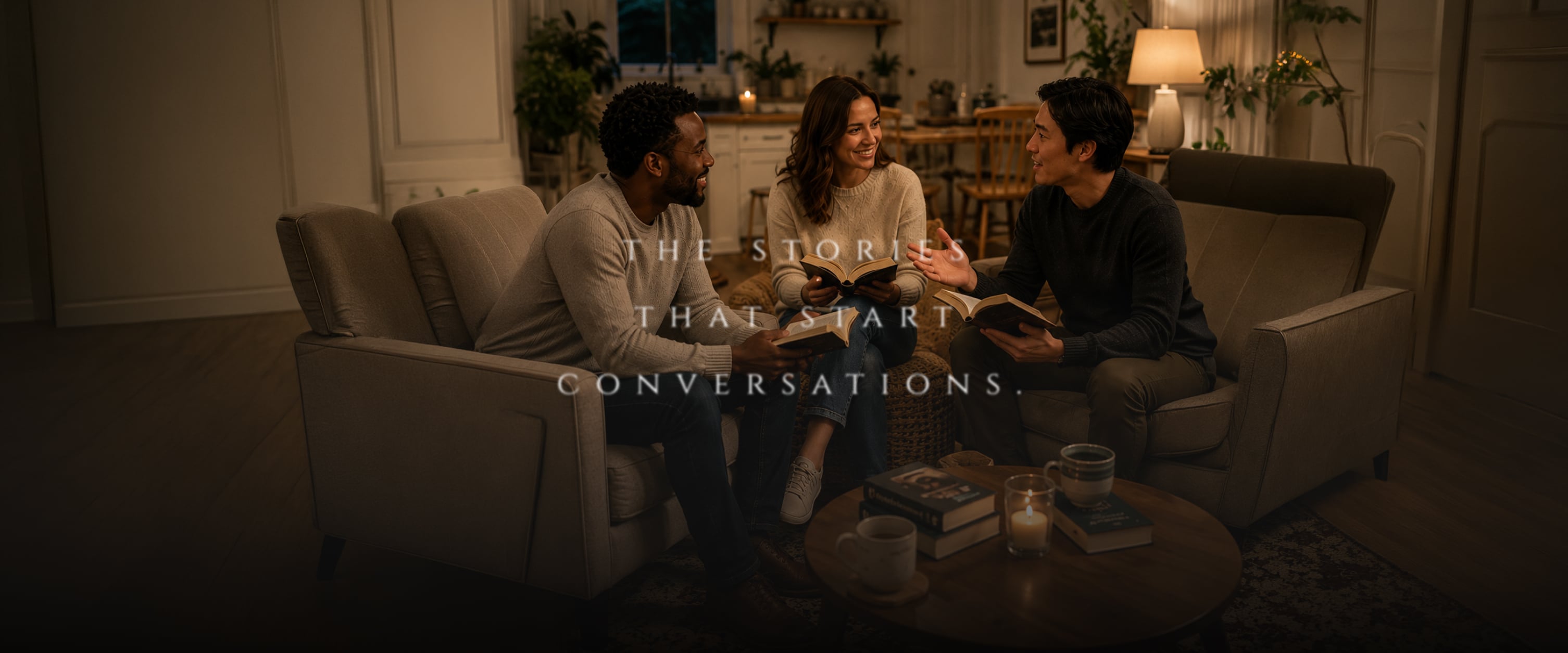
Ask any book club that's been meeting for years, and they'll tell you the same thing: the books everyone agreed on are the ones nobody remembers. The ones that caused an actual discussion, over wine, over text threads that ran past midnight, over who was right about a character nobody could quite forgive? Those are the ones that stay on the shelf, spine cracked, long after the meeting ends.
It's not the happy endings or the perfectly tied-up plots. It's the mess. The questions that don't have clean answers. The characters who make choices you're not sure you agree with.
Those are the books that start conversations. And after years of writing them, I've come to think that's not an accident. It's a craft choice.
Why Some Stories Linger
You finish a book and immediately want to talk about it. Not because you need someone to explain what happened, but because you need to process what it meant.
The stories that do this well share something in common: they trust you to sit with complexity.
They give you characters who aren't heroes or villains but people making imperfect choices in difficult situations. They present moral dilemmas without prescribing the "right" answer. They layer meaning beneath the surface, rewarding readers who want to dig deeper.
This is the territory where book clubs thrive.
The Power of Morally Complex Characters
I write characters who struggle. Who second-guess themselves. Who sometimes choose the wrong path even when they know better. Because that's real.
Grace Walker doesn't get a tidy relationship with her own gift. In Underneath the Fireflies, her empathic visions show her things she can't unsee, and I never let her be certain whether that gift is a blessing or a curse. She's brave in one chapter and full of doubt in the next, and readers tell me they finish the book still arguing about whether she made the right call at the end.
Ruby Draker doesn't get an easy read either. Her family is murdered, and the only way to keep her alive is to erase the life she once knew. Readers split every time on whether she should have fought harder to hold onto who she was, or whether letting go was the only way to survive.
And then there's Reinhardt. A man who has done things that can't be undone, still trying to build something better anyway. I don't tell you whether he deserves that chance. I just let you watch him try.
When readers encounter a character who feels authentically flawed, something shifts. You stop asking "What happens next?" and start asking "What would I do?"
That question transforms reading from a passive experience into an active exploration. You're not just following a story anymore. You're testing your own values against the fictional world in front of you.
And that's when the best conversations begin.
Layered Storytelling Invites Discussion
A story with layers gives different readers different entry points.
One person connects with the relationship dynamics. Another sees the broader social commentary. Someone else fixates on a single moment everyone else glossed over.
Take Underneath the Fireflies. Some readers come to it for the mystery: what actually happened the night of the accident that sent Grace running to that island. Others come for the psychological layer: what it means to carry a gift no one else believes. Bring both groups into the same book club discussion, and you get a richer conversation than either reader expected on their own.
Stephen King once wrote, “Fiction is the truth inside the lie.” I think about that line often. It's exactly why I build books with more than one truth buried inside them. Nobody in the Draker family experiences their loss in Shadows in the Aftermath the same way, and neither will your book club.
When you bring those perspectives together in a discussion, the story expands. You realize the author planted details you missed. You reconsider scenes you thought you understood.
I think of it like an echo in a canyon. The sound leaves your mouth once, but it comes back to you changed, carrying the shape of everything it bounced off on the way back. A good book club discussion works the same way. One person says something out loud, and it returns to the group heavier than it left, carrying weight the original comment never had on its own.
That's the moment a book stops belonging only to me. It starts belonging to whoever is willing to keep the conversation going.
This is why I build my narratives with intention. The surface story moves you forward, but the undercurrents reward attention and discussion.
Books Worth Discussing
I want my books to live beyond the reading experience.
I want them to spark debate at your book club meeting. I want them to make you text a friend at midnight because you just realized something new. I want them to be the kind of stories you recommend with a caveat: “Tell me what you think when you're done.”
If you're part of a book club looking for your next read, I'd love to connect. I've put together a short discussion guide to help facilitate deeper conversations around the themes and characters in my work.
Because the best stories don't end when you close the book.
They end when you've talked them through with people who see them differently than you do.
Visit my website to explore the books. Let's start a conversation.
- Marianne